Joy
Work for the article “Joy” (letter Р) in the book “The Spiritual Alphabet”.
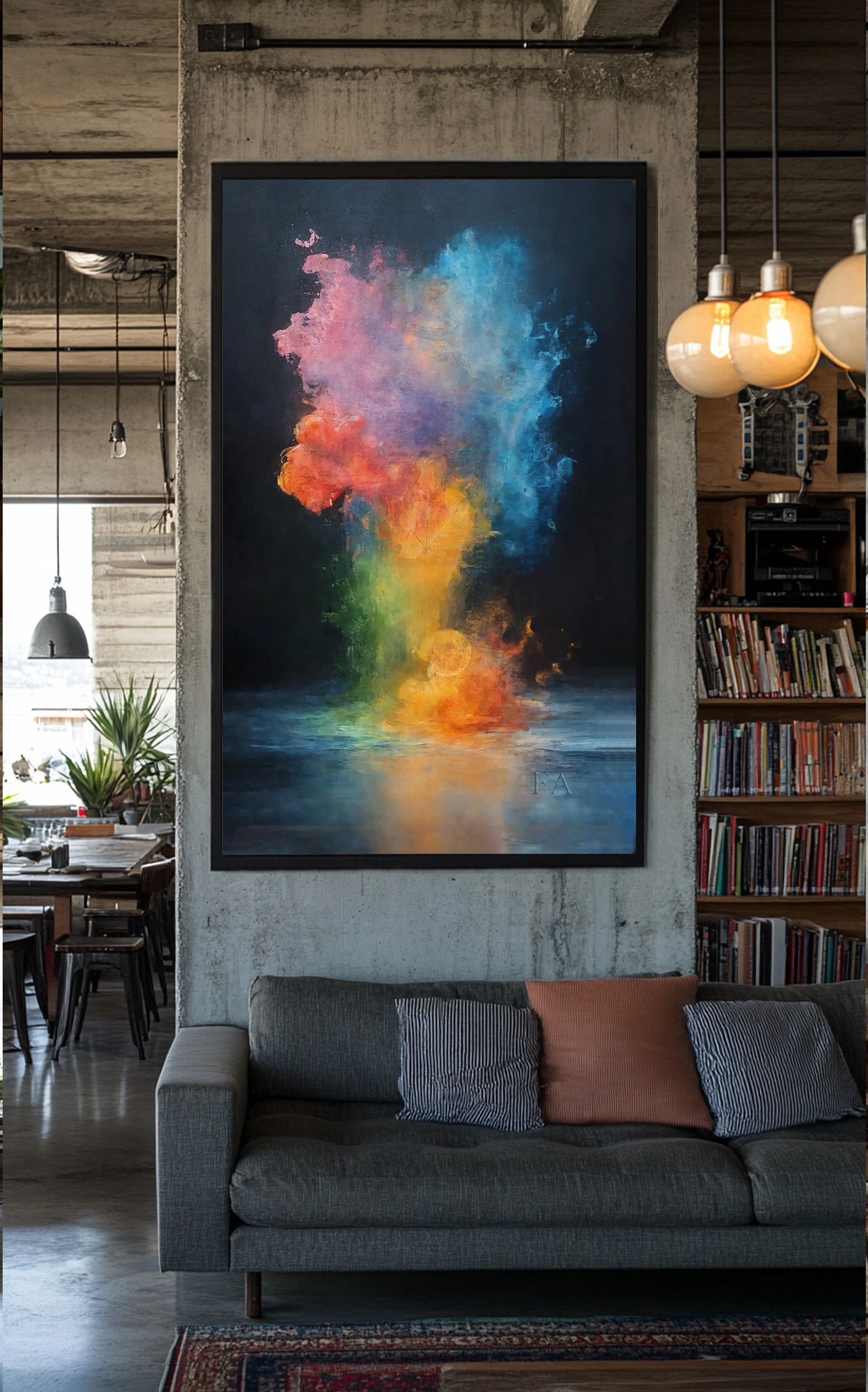
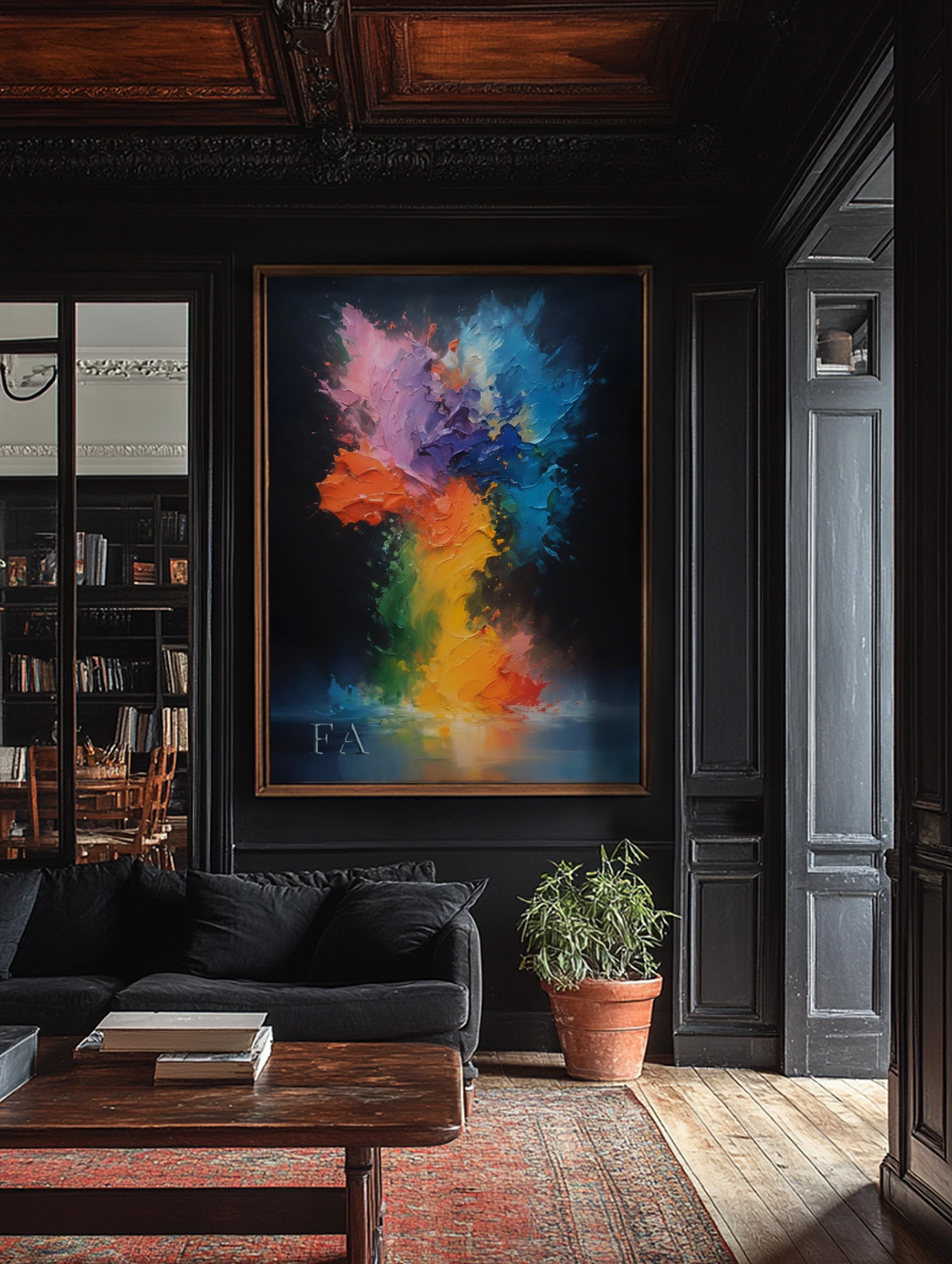
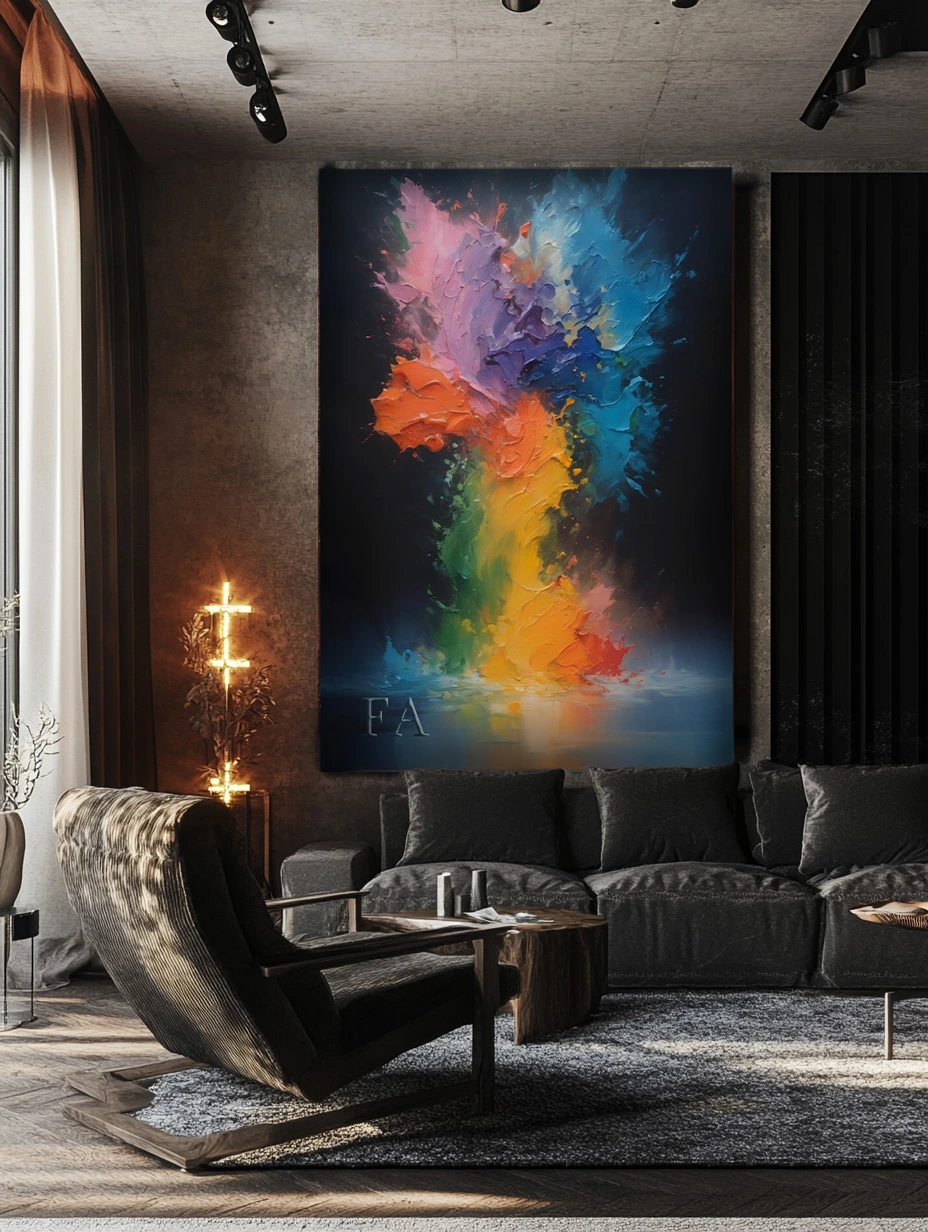
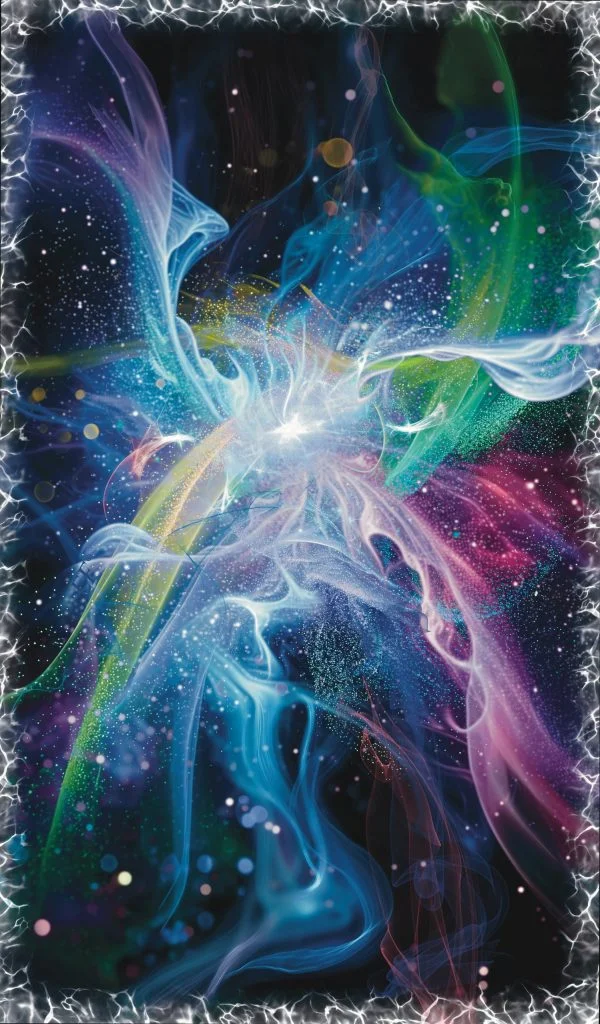
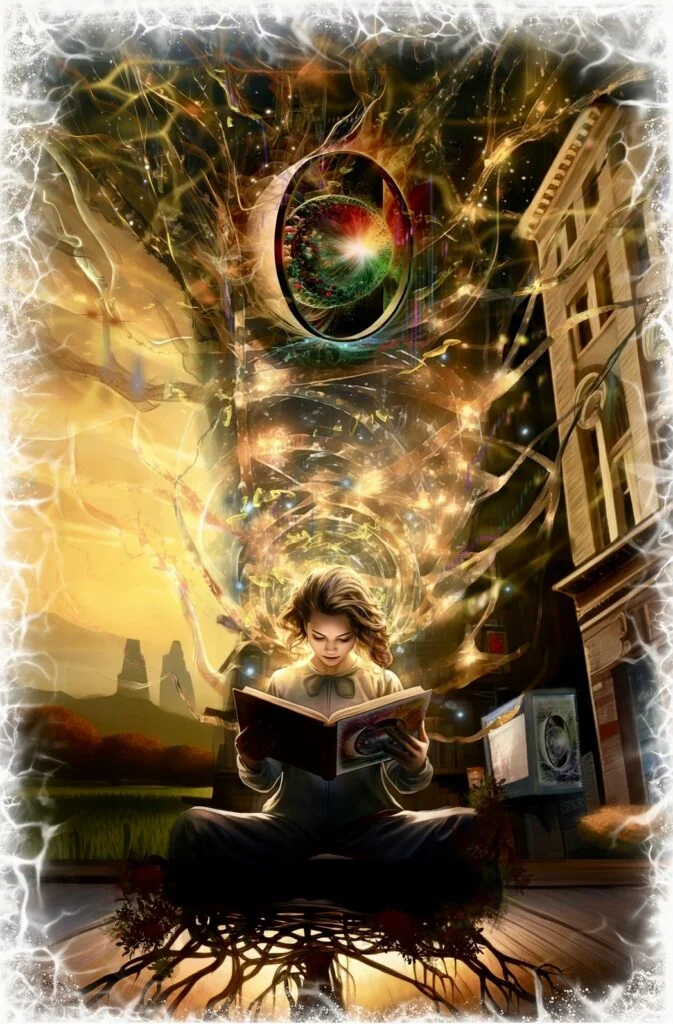
The work is a visual-energetic model of the emotional state of joy, read not as a reactive feeling but as a frequency configuration of consciousness.
The central idea: joy is not a function of external events — it is generated by the inner choice of the observer.
This is reflected in the compositional spiral of streams of different frequencies, in which light, colour and form are organised into a dynamic equilibrium.
Compositional analysis:
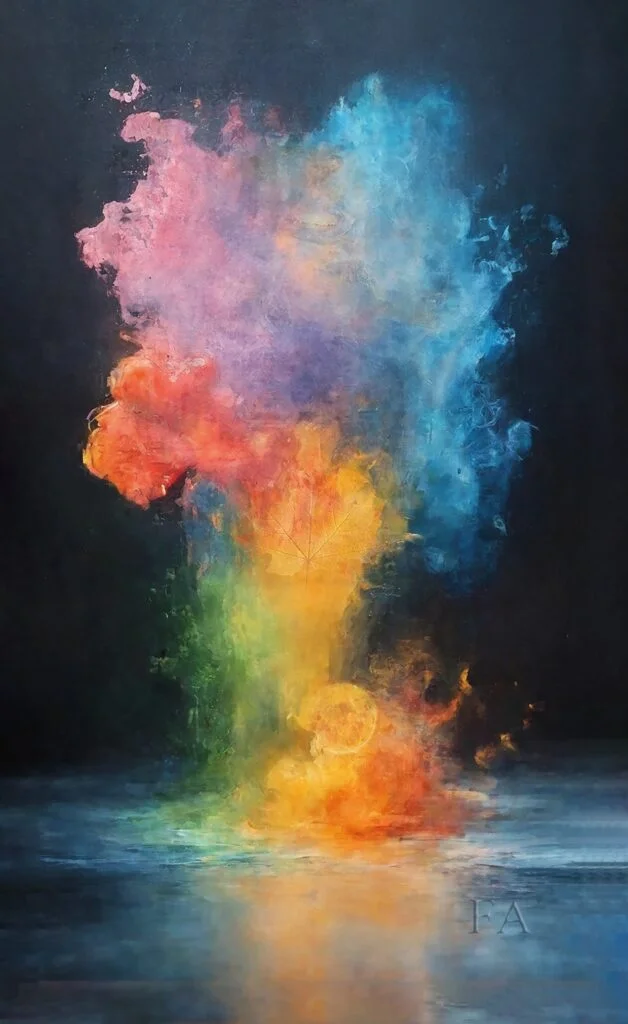
• The colour waves run from red and violet toward blue and yellow, forming an energetic scale of emotions.
• At the centre are elements of symbolic density: a heart (the emotional core), a leaf (natural cyclicity), a sphere of light (a source of energy and awareness).
• The overall structure of the flow resembles a vortex — yet not a chaotic one, but a self-regulating one. It points to a view in which emotion does not "sweep over" consciousness but arises as the consequence of inner tuning.
Philosophical vector:
In line with the chapter's text, joy is not treated as a peak of emotion or a "gift of fate".
On the contrary, it is read as a high-frequency platform of presence, reachable through conscious command of the direction of attention.
The painting gives this thesis visual form: joy is not a summit but a base frequency.
The whole, in one thought:
Joy is not a consequence.
It is a point of focus.
What looks like a flash of happiness is the result of a calibration of perception.
The one who can hold joy under neutral conditions
steers their own frequency like a navigational instrument. The painting works not as an emotional illustration but as a visual formula of an inner technology.
In this sense it may be read as:
• an algorithm of how consciousness moves through the emotional spectrum,
• or a scheme of the interplay between the energetic and embodied layers of perception.