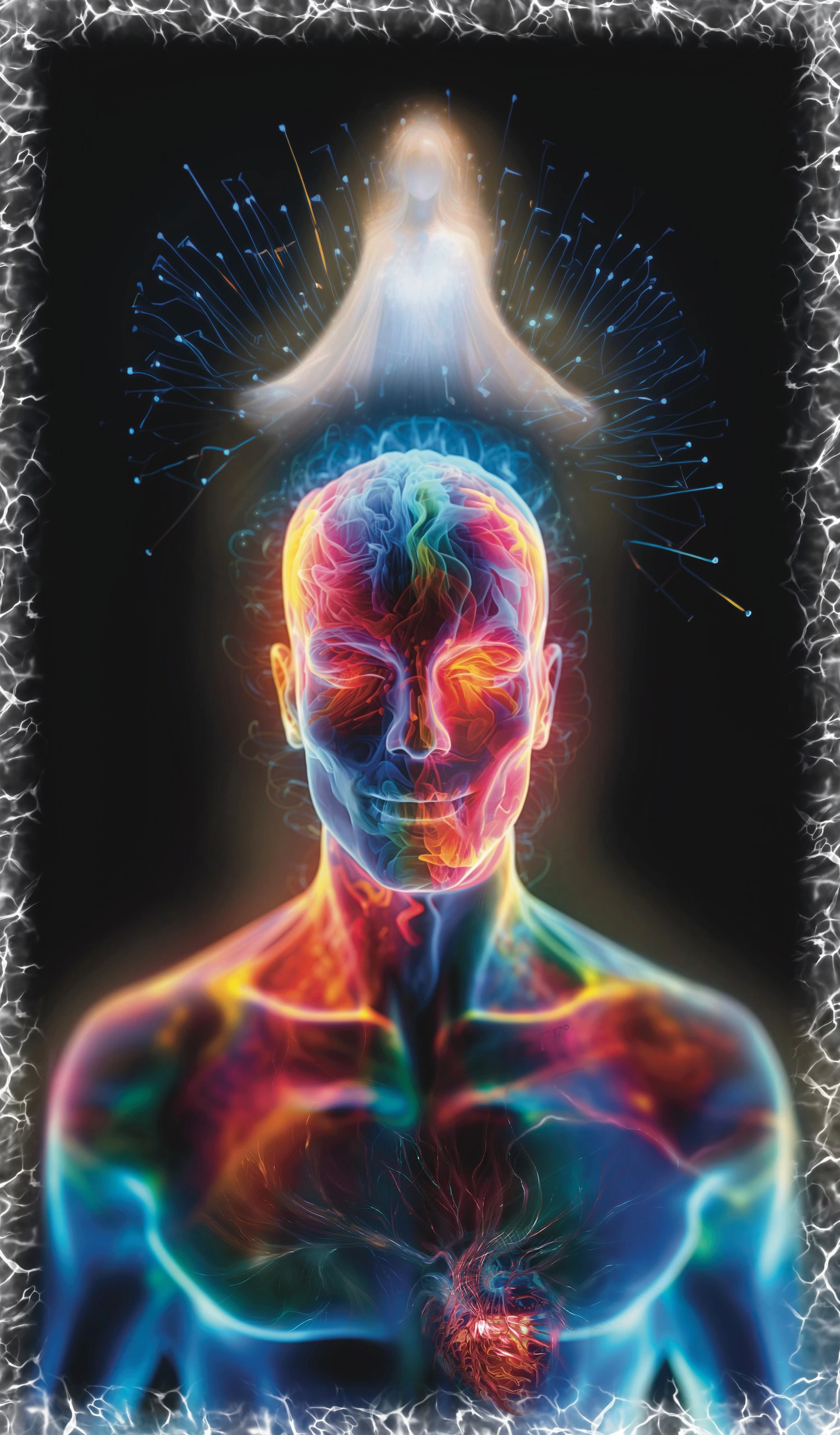
A mirror is not glass. A mirror is a law. It does not show you the world — it shows you in the world, and the difference between those two things is greater than it looks. You step up to it hoping to see what is outside, and you see what is inside. And the most honest thing that can be said about life is this: it is built exactly the same way.
The world does not give you what you want. The world returns to you what you are.
We are used to thinking that we live among circumstances — people, events, strokes of luck and offence that happen to us from outside, like rain. But look closely and you will notice a strange regularity: circumstances bear a suspicious resemblance to you. Not to the person you consider yourself to be — to the person you are at this moment. An irritated man lives in an irritating world. An anxious one finds reasons for anxiety where a calm one would notice nothing. That is not coincidence and not bad luck. That is reflection.
What irritates you in others
There is a simple experiment that can turn everything over, if you run it honestly. Recall a person who angers you. Not an enemy — just someone whose manner, whose behaviour, whose intonation raises a dull resistance in you. Now ask not “what is wrong with him” but “why does this touch me, of all people”. You walk past ninety other things indifferently, yet this one you react to with your whole body. Which means the string that was struck is yours. If it were not in you, there would be no sound.
In other words: what irritates you in another lives in you. Sometimes as a trait you suppress in yourself, which is why you cannot bear it when another allows himself the same. Sometimes as a fear of becoming like that. Sometimes as envy dressed up as contempt. Another man’s boasting enrages the one who would like to boast and does not dare. Another’s freedom angers the one who keeps himself in a cage. The mirror neither flatters nor slanders — it simply reflects, and in the face opposite you recognise, every time, a fragment of your own.
The world is a mirror, and irritation is a recognition you refuse to admit.
Here it is easy to slide into a comfortable mistake: if the world reflects me, then I must scold myself for it. No. This is not about guilt. Guilt is the same accusation, only turned inward, and it works just as uselessly. This is about responsibility — a different state altogether. Responsibility is the calm acknowledgement: if there is a crack in my reflection, the crack is in me, and it is not the reflection that needs mending.
Polishing the glass
Picture a man who dislikes his own face in the barber’s mirror. So he starts rubbing the glass. He wipes it with a cloth, breathes on it, polishes it to a shine, gets angry that nothing helps, takes another mirror — and finds the same face there. From the outside it looks like madness. Yet this is exactly what everyone is doing who tries to fix his life by changing the people around him instead of himself. He changes jobs — but arrives there the same man, and within six months the same conflicts surround him. He changes partners — but brings his old self into the new relationship, and the plot repeats itself down to the comma. The glass changes; the reflection does not, because the one being reflected is the same.
You cannot out-argue the world and you cannot talk it round, because the world is not an opponent — it is a surface. Shouting at your reflection, demanding that it smile while you frown, is an occupation for someone who has not understood the mechanism. And the mechanism is simple: the one reflected changes — the reflection changes. Not the other way round. Always inside first, then outside. Style always comes second — in painting and in fate alike.
Don’t polish the glass. Change the face — and the mirror will mend itself.
As you love yourself
From here follows the most important and the least comfortable part. To the degree you love yourself, the world loves you. This is not a greetings-card metaphor; it is the mechanics of reflection taken to its conclusion. A person with no warmth inside toward himself will receive cold from the world — not because the world is cruel, but because cold is the absence of warmth, and there is nothing for the world to reflect. He will read neutral glances as condemning, a routine phrase as a jab, someone’s silence as a verdict. Not because the world said so. Because that is the sound of his own frequency, and the world merely returns it in resonance.
And the reverse: a person at peace with himself walks into the very same world and finds it friendly. The same people, the same streets, the same rain — but the reflection is different, because the source is different. He does not demand love from the world, and therefore receives it; he does not beg the mirror for a smile — he simply smiles, and the glass cannot help answering. Love for yourself here is not self-admiration and not the egoism of the ego, that primitive guard who confuses love with defence. It is the state from which alone anything can be created. Nothing is created out of lack — out of lack one defends. Creation comes from fullness.
That is why “Why?” matters more than “who is to blame”. When the world shows you an unpleasant reflection, do not ask who arranged it. Ask: why has this appeared, what in me does it light up, where is it leading me. Pain in the reflection is not punishment but a marker of deviation, a compass needle showing where you have strayed from yourself. Thank the mirror for its accuracy instead of hitting it with your fist.
The world is the most honest of surfaces. It never lies and never flatters; it simply hands you back to yourself, frame by frame, meeting by meeting, down to the smallest detail. And the whole of human freedom fits into one movement: to stop arguing with the reflection and attend to the only thing a reflection answers to — yourself.
If you want the world to change toward you, change the one it reflects.
Cover work — “The Ideal Man” →
— Evgeny Fleysher
Artist and engineer. Author of WHY? and The Spiritual Alphabet, creator of the Art as Healing project. Paints works built on sacred geometry.
About the author and the method →